
Smart Mushrooms
Harnessing Generative AI, IoT sensors, and digital shadows so Kenyan mushroom farmers can grow more, with less risk.
Why Smart Mushrooms
Understanding the problems facing Kenyan mushroom farmers.
Mushroom farming in Kenya is commercially attractive but highly sensitive to environmental control. Small-scale and peri-urban farms often rely on manual monitoring of temperature, humidity, carbon dioxide and light.
This makes it difficult to detect microclimate drift, contamination risk, poor ventilation or conditions that reduce yield. Farmers face challenges with:
- Limited real-time data on growing conditions
- Early contamination detection
- Low adoption of precision tools
- Youth and women digital-skills gap
- Post-harvest losses
BRIDGE-AI Kenya is changing this. Through JKUAT's Smart Mushroom pilot, we're exploring how GenAI, IoT sensors, and digital shadows can help farmers grow more mushrooms with less risk.
Solution Architecture
From sensors to insights — the complete pipeline behind smart mushroom farming.
GenAI Predictive Analytics
Advanced AI models analyze sensor data to predict optimal growing conditions, detect anomalies early, and recommend adjustments before problems occur.
IoT Sensor Network
Real-time monitoring of temperature, humidity, CO₂, light and substrate moisture using low-power, long-range LoRaWAN sensors for continuous data collection.
Digital Shadows
Virtual models of grow rooms that simulate "what-if" scenarios, forecast yields, and provide training simulations for farmers and agritech advisors.
Low-Bandwidth Dashboards
Farmer-friendly dashboards that work on basic smartphones with low internet connectivity, showing simple alerts and actionable insights.
Virtual Assistants
Multilingual AI-powered assistants provide farmers with instant advisory support, answering questions about mushroom farming in local languages.
Farmer Advisory Tools
Practical tools for farmers including SMS alerts, WhatsApp notifications, and simple visual guides to help them act on the data.
Sensors & Measurements
What we monitor to keep mushrooms growing optimally.
Temperature
Air: 20–30°C | Substrate: 22–28°CCritical for mycelial growth and fruiting. Temperature drift can reduce yields or stop growth entirely.
Relative Humidity
85–95%Mushrooms require very high humidity. If it drops too low, fruiting bodies dry out and abort.
Carbon Dioxide
< 1000 ppmHigh CO₂ levels inhibit fruiting and cause deformities. Fresh air exchange is essential during fruiting.
Light Intensity
500–1000 lxLight signals mushrooms to initiate fruiting. LED lights (6500K) are used to avoid adding heat.
Substrate Moisture
60–70%Maintains proper hydration for mycelium growth and prevents contamination.
Outdoor Microclimate
Weather DataOptional monitoring of external conditions helps farmers plan and understand environmental impacts.
Digital Shadows
Virtual models that help farmers predict, train and optimize.
Small Peri-Urban Unit
A digital shadow designed for small-scale farmers in peri-urban areas. This model simulates growing conditions for limited-space operations.
- What-if scenario testing
- Yield forecasting
- Training simulations
- Resource optimization
Semi-Commercial Farm
A larger digital shadow model for semi-commercial mushroom farms with multiple grow rooms and higher production capacity.
- Multi-room monitoring
- Scalable predictions
- Business planning tools
- Replication playbooks
Pilot Site
Where the Smart Mushroom innovation is happening.
Mushroom Demonstration Farm
JKUAT Smart Farm Zone, Juja, Kenya
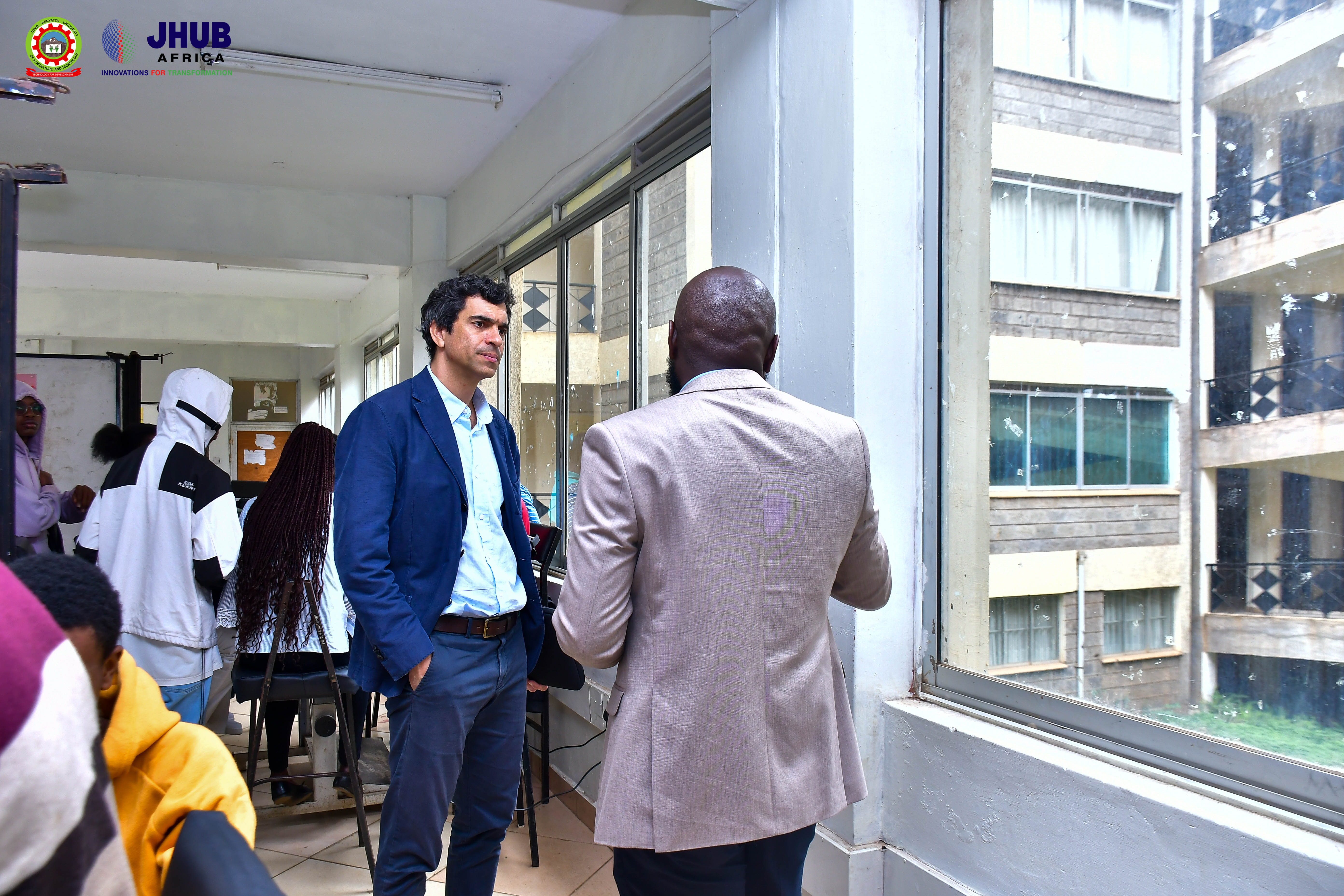
The pilot is hosted at JKUAT's Smart Farm Zone, a dedicated research and demonstration facility. Here, we deploy sensors, test digital shadow models, and train farmers in real-world conditions.
The site serves as a Kenya Living Lab where farmers, researchers, youth, women, advisors and SMEs co-design and test solutions together.
Training Targets
Building digital skills across Kenya's agricultural ecosystem.
Smallholder Farmers
Hands-on training in using sensor data and AI tools to improve mushroom yields and reduce losses.
Youth Agripreneurs
Digital skills training in AI, IoT and data analytics to create new agritech business opportunities.
Women-Led Farms
Targeted training and mentoring to empower women in mushroom farming and agritech adoption.
SMEs & Advisors
Technical assistance and mentoring for agricultural SMEs to adopt, adapt and scale smart farming solutions.
Progress Updates
Track the journey of the Smart Mushroom pilot from setup to scale.
Pilot Setup
Sensor installation, baseline data collection and system configuration at the JKUAT Smart Farm Zone.
CompletedLiving Lab & Stakeholder Onboarding
Co-design activities with farmers, researchers, youth, women and SMEs to ensure solutions meet local needs.
ActivePilot Implementation & Training
Deployment of GenAI analytics, sensor data collection, digital shadow validation and farmer training workshops.
ActiveFeedback & Refinement
Collecting farmer feedback, usability testing and iterative improvement of the system.
UpcomingBootcamps & Replication
East Africa/Kenya bootcamp, SME mentoring, replication toolkit launch and community scaling.
UpcomingPhoto Gallery
Images from the Smart Mushroom pilot in action.
Frequently Asked Questions
Common questions from farmers and technical audiences.
A smart mushroom farm uses sensors, AI and digital tools to monitor and control growing conditions automatically. This helps farmers maintain optimal temperature, humidity and CO₂ levels, reducing the risk of crop failure and increasing yields.
By providing real-time data and AI-powered alerts, the system helps you detect problems early — before they affect your mushrooms. You'll get simple, clear advice on when to adjust conditions, reducing waste and improving harvest quality and quantity.
The system is designed for low-bandwidth environments. Alerts can be sent via SMS or WhatsApp, and dashboards work on basic smartphones. You don't need high-speed internet to benefit from the system.
The system uses low-power IoT sensors including temperature, humidity, CO₂, light intensity and substrate moisture sensors. Data is transmitted via LoRaWAN to a central gateway, then processed in the cloud using GenAI analytics.
GenAI models analyze historical and real-time sensor data to predict optimal growing conditions, detect anomalies before they become critical, and generate actionable recommendations for farmers. This reduces the need for manual monitoring and expert knowledge.
A digital shadow is a virtual model of a physical grow room. It simulates how conditions change in response to different actions, allowing farmers to test "what-if" scenarios, forecast yields, and train without risking real crops.
Grow with the pilot
Whether you're a farmer, student, SME or researcher, there's a place for you in the Smart Mushroom pilot.